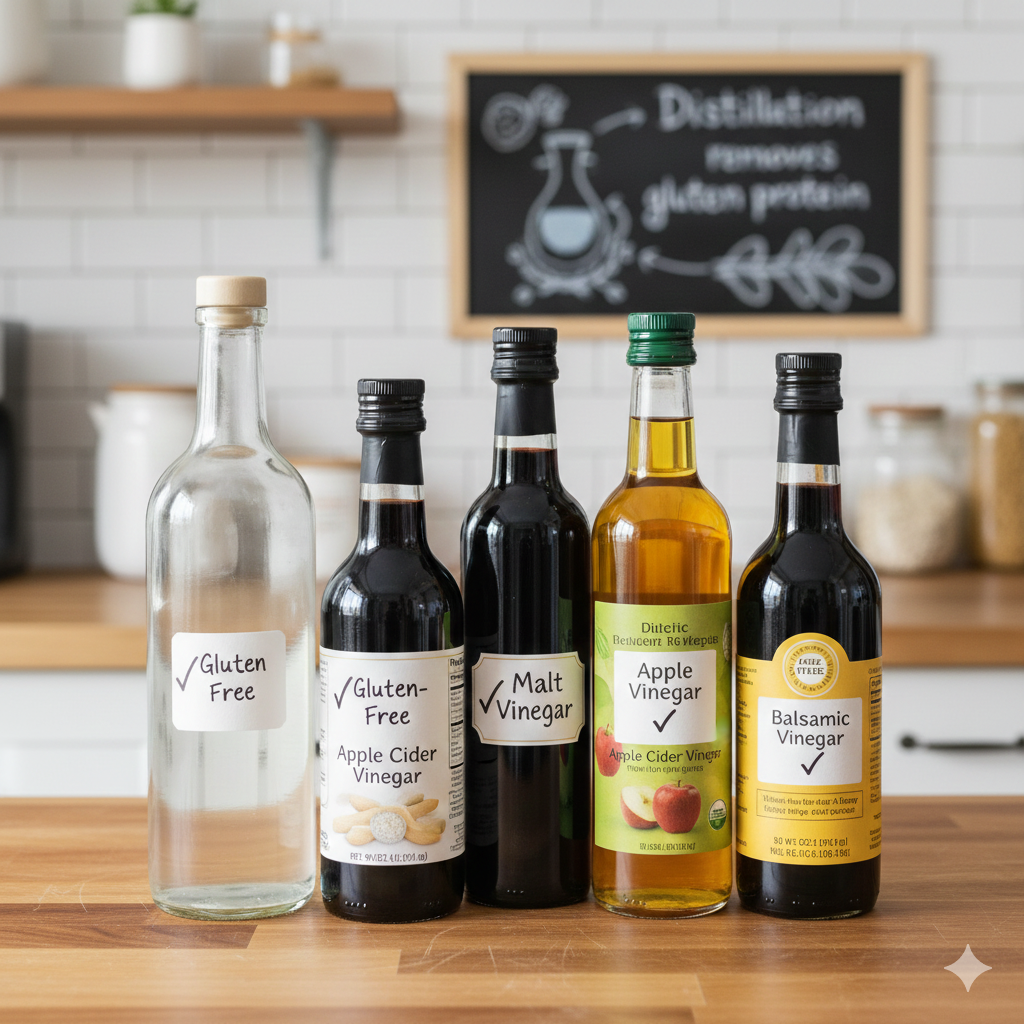
Does vinegar have gluten is a question that many parents of children with celiac disease ask when they begin reading labels on condiments and dressings. Most types of distilled vinegar are safe for a celiac child because the distillation process effectively removes the gluten protein from the starting grain. However, not all vinegars undergo this process, and some varieties use barley as a base without distillation. To keep your child’s gut healthy and avoid accidental “glutening,” you must know which bottles are safe and which are hidden dangers. This guide simplifies the science of vinegar so you can shop with confidence.
1. Distillation and the Question: Does Vinegar Have Gluten?
The most important thing to understand is that the distillation process acts as a filter. When manufacturers make distilled white vinegar, they boil the liquid and collect the steam. Gluten proteins are too heavy to evaporate, so they stay behind in the boiling pot. Because of this, even if a company uses wheat to start the process, the final distilled product is gluten-free.
When you ask does vinegar have gluten regarding distilled white vinegar, the answer is almost always no. Most major celiac organizations confirm that distilled vinegars meet the safety standard of less than 20 parts per million of gluten. This makes it a safe choice for pickling, baking, and cleaning in a gluten-free household.
2. Malt Vinegar: A Hidden Source of Gluten
While distillation makes many vinegars safe, malt vinegar is the major exception for celiac families. Malt vinegar is not distilled; it is made from barley malt. Since barley is one of the three main grains that contain gluten, malt vinegar is never safe for a child with celiac disease.
If you are wondering does vinegar have gluten while at a fish and chips shop, always assume the brown vinegar on the table is malt-based. It contains enough gluten to cause a severe autoimmune reaction. Always double-check the labels on salad dressings and marinades, as malt vinegar is a common ingredient that can slip past an untrained eye.
3. Apple Cider and Wine Vinegars
Many parents prefer using fruit-based vinegars like apple cider vinegar or red wine vinegar. Since these are made from apples or grapes, they are naturally gluten-free from the start. They do not contain any grain-based ingredients, so the question does vinegar have gluten does not apply to these varieties in their pure form.
Apple cider vinegar is an excellent staple for a celiac child’s diet. It adds flavor to meals without the risk of cross-contamination. However, you should still check for “flavorings” or “additives” on the label, as some cheaper brands might add thickeners or colors that contain trace amounts of wheat.
4. Balsamic Vinegar and Potential Additives
Balsamic vinegar is made from grape must and is generally safe. However, as you investigate does vinegar have gluten, you might find that some “Balsamic Glazes” or imitation balsamics use caramel coloring or thickening agents. While most caramel color in North America is made from corn, in other parts of the world, it might be derived from barley or wheat.
For a child with celiac disease, it is best to stick to traditional balsamic vinegar or brands that explicitly state they are gluten-free. If a glaze is thick and syrupy, it is more likely to contain a stabilizer that could pose a risk. Always be an “ingredient detective” to ensure the answer to does vinegar have gluten stays a safe “no” for your child.
5. Rice Vinegar and Sushi Safety
Rice vinegar is a staple in many Asian dishes and is naturally made from fermented rice. Rice does not contain gluten, so pure rice vinegar is safe. However, parents often ask does vinegar have gluten when they see “Seasoned Rice Vinegar.”
Seasoned varieties often contain sugar and salt, but they can also contain wheat-based additives in some brands. If you are eating out at a sushi restaurant, ask if the sushi rice is seasoned with pure rice vinegar or a blend. Some commercial rice vinegar blends used in restaurants may contain wheat stabilizers to keep the flavor consistent.
6. Understanding Labeling and Cross-Contamination
Even if a vinegar is naturally safe, the facility where it is bottled matters. If a company bottles malt vinegar on the same line as distilled cider vinegar, there is a small risk of cross-contamination. For a child whose gut is highly sensitive, this tiny amount can cause issues.
When you ask does vinegar have gluten, look for brands that have a “Certified Gluten-Free” stamp. This means the product has been tested and verified to be safe. It removes the guesswork and ensures that your child’s favorite salad dressing won’t cause a painful flare-up.
Protecting Your Child’s Heart and Gut
Managing celiac disease is about more than just avoiding stomach pain. Chronic inflammation from gluten exposure can put a strain on the entire body, including the heart. By ensuring that the answer to does vinegar have gluten is always safe for your kitchen, you are helping to keep your child’s systemic inflammation low. A healthy gut leads to a healthy cardiovascular system as they grow into adulthood.
For more information on the link between autoimmune health and long-term heart wellness, please visit cardiachq.com. They offer resources to help families manage dietary restrictions while prioritizing heart-healthy habits for life.
Let’s Talk About Your Kitchen!
Navigating the world of vinegars and condiments can be tricky at first. We want to hear from you!
- Have you ever found “malt vinegar” hidden in an unexpected product?
- What is your favorite gluten-free vinegar for making kid-friendly dressings?
- Did you know that distillation made wheat-based vinegar safe?
Share your stories and tips in the comments below! Your experience helps other parents feel less overwhelmed by the celiac diagnosis. If you found this article helpful, please share it with your family or your child’s school to help them understand why the question does vinegar have gluten is so important for your child’s safety.
Would you like me to provide a quick “Safe Vinegar Shopping List” that you can save to your phone for your next grocery trip?