White rice and diabetes have a complicated relationship, but you can still enjoy this staple food with the right strategies. Many people with type 2 diabetes worry they must give up white rice entirely. The truth is different. You can manage your blood sugar while keeping white rice on your plate. This article explores three evidence-based approaches: understanding the glycemic index, using the cooling method, and practicing portion control.
What Is the Glycemic Index and Why Does It Matter for White Rice and Diabetes?
The glycemic index (GI) measures how quickly a food raises your blood sugar. Foods with a high GI digest rapidly and cause sharp glucose spikes. White rice typically has a high GI, often around 73. Some varieties range from 70 to 85. This means white rice and diabetes management require careful attention.
When you eat white rice, your body breaks down the starch into glucose quickly. This rapid digestion can challenge blood sugar control, especially for people with type 2 diabetes. The American Diabetes Association recognizes white rice as a high-GI food.
But here is the good news. Not all rice affects blood sugar the same way. Different varieties have different GI values:
Short-grain white rice: GI 72–86
Long-grain white rice: GI 56–69
White basmati rice: GI 50–58
Brown rice: GI 50–55
Black rice: GI 42–45
Understanding these differences helps you make smarter choices. White basmati rice has a lower GI than short-grain varieties. Switching to basmati can reduce the glycemic impact of your meals.
Research shows a clear connection between high white rice consumption and type 2 diabetes risk. A meta-analysis of eight prospective cohorts found that each additional 158 grams of white rice per day (about one cup cooked) was linked to a 13% higher risk of type 2 diabetes. This association is particularly strong in Asian populations where rice is a dietary staple.
Why does this happen? White rice undergoes processing that removes the bran and germ. This strips away fiber, vitamins, and minerals. What remains is mostly starch that digests quickly. The rapid glucose release forces your pancreas to produce more insulin. Over time, this can contribute to insulin resistance.
But you do not need to eliminate white rice completely. The key is understanding how to modify your approach. Let us explore three practical strategies.
Cooling cooked white rice changes its starch structure. This process, called retrogradation, converts some easily digested starch into resistant starch. Resistant starch behaves like fiber. It resists digestion in the small intestine. Instead, it travels to the large intestine where it feeds beneficial gut bacteria.
A 2026 study published in Foods journal examined this effect in detail. Researchers found that storage significantly reduced the glycemic index of boiled rice from 83.03 to 43.55 after prolonged freezing. At the same time, resistant starch content increased from approximately 1.8% to nearly 4.0%. The study identified a strong inverse relationship between resistant starch and glycemic index.
Multiple studies since 2015 have confirmed that people who eat cooked and cooled rice have significantly lower blood glucose levels compared to those who eat freshly cooked rice. The Diabetes Canada organization explains that resistant starch can lower the glycemic load of foods and support better blood sugar management.
How to Use the Cook-Cool Method
Here is a simple process you can follow:
Cook your white rice as you normally would.
Let it cool completely at room temperature.
Refrigerate for 12–24 hours.
Reheat gently when ready to eat. The resistant starch remains even after reheating.
The cook-cool method works best with medium or long-grain rice. You can use cooled rice in salads, stir-fries, or as a side dish.
One important note: this method does not reduce the total carbohydrate content. A cup of rice still contains the same grams of carbohydrate whether you eat it hot or cooled. Portion control still matters.
Diabetes Victoria recommends a simple self-experiment to see if this method works for you. Check your blood glucose before and two hours after eating cooled rice. Compare the results with freshly cooked rice on another day.
Strategy 2: Practice Portion Control for White Rice and Diabetes Management
Portion size plays a crucial role in managing white rice and diabetes. Even low-GI rice can raise blood sugar if you eat too much. The American Diabetes Association recommends a serving of ⅓ to ½ cup of cooked rice.
Dr. Emilia Kristina Maramba, a public health and family medicine specialist, recommends a practical approach. She suggests 1 cup of rice per meal for the average person. More active individuals can consume up to 4 cups per day. Those with a sedentary lifestyle should decrease to ½ cup per meal.
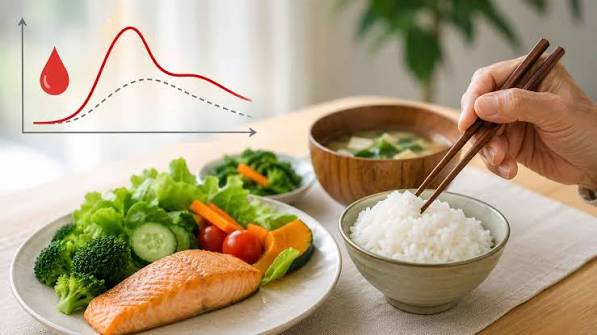
The Plate Method for Better Blood Sugar Control
The plate method offers a simple way to manage portions:
Fill one-quarter of your plate with rice or other carbohydrates.
Fill one-quarter with lean protein like chicken, fish, or legumes.
Fill the remaining half with non-starchy vegetables.
This approach ensures balanced nutrition while keeping rice portions in check. The CDC also recommends using the plate method to balance food groups and portion sizes.
Choose Lower-GI Rice Varieties
Not all rice affects blood sugar equally. Here are some better options for people managing white rice and diabetes:
Brown rice: GI 50–55
Brown basmati rice: GI 45–50
Black rice: GI 42–45
Red rice: GI 55
Brown rice retains the bran and germ, preserving fiber, magnesium, and other phytochemicals. A 12-week Philippine randomized trial found that a brown rice diet improved BMI, fasting glucose, and cholesterol compared to a white rice diet.
Pigmented rice varieties like black and red rice contain polyphenols with antioxidant properties. A systematic review concluded that pigmented rice acutely reduces postprandial glucose and insulin.
Strategy 3: Combine White Rice with Other Foods to Reduce Glycemic Impact
What you eat with white rice matters as much as the rice itself. Pairing white rice with protein, fiber, and healthy fats slows digestion and reduces blood sugar spikes.
Add Protein and Vegetables
Eating white rice with protein sources like chicken, fish, eggs, or legumes can lower the overall glycemic response of your meal. Protein slows gastric emptying, which means glucose enters your bloodstream more gradually.
Non-starchy vegetables add bulk and fiber to your meal without contributing many carbohydrates. Fill half your plate with vegetables like broccoli, spinach, peppers, or green beans.
Use Healthy Fats
Adding a small amount of healthy fat, such as olive oil or avocado, can further slow digestion. Fat delays stomach emptying and reduces the speed of glucose absorption.
Try the “Rice and Eggs” Approach
Some research suggests that combining rice with eggs can help stabilize blood sugar. The protein and fat in eggs moderate the glycemic response of the rice.
A growing body of evidence supports low-glycemic index diets for diabetes management. A 2026 systematic review and meta-analysis found that low-GI diets significantly reduced fasting blood glucose by 0.19 mmol/L and HbA1c by 0.22%. Another 2026 meta-analysis focusing on Asian populations confirmed that low-GI diets significantly reduced HbA1c and LDL levels while increasing HDL levels.
The World Health Organization recommends dietary strategies including reduced calories, reduced intake of dietary fat, and high dietary fibers and whole grains to reduce diabetes risk. Carbohydrates should provide 45–65% of total daily calories.
A 2026 study on low glycemic load dietary intervention found that mean HbA1c declined from 8.68% to 6.50%. This represents a clinically significant improvement in blood sugar control.
Low Glycemic Index Diets on Glycemic and Lipid Control Across Diverse Populations: A Systematic Review and Meta-Analysis.Epistemonikos. 2026. https://www.epistemonikos.org
Effect of low glycemic index diet on HbA1c in type 2 diabetes mellitus: A systematic review and meta-analysis in Asia.Poltekkes Aceh Journal. 2026. https://ejournal.poltekkesaceh.ac.id
American Diabetes Association Professional Practice Committee. 5. Facilitating Positive Health Behaviors and Well-being to Improve Health Outcomes: Standards of Care in Diabetes—2026. Diabetes Care. 2026;49(Supplement 1).

2 thoughts on “White Rice and Diabetes: 3 Ways to Manage Blood Sugar”